
I've started automating my home little by little. I think it's impossible for a normal person to immediately determine what's needed. What I definitely recommend is installing alarm sensors on every shutter/door/window/roller shutter.
In my home, I control, through home automation:
- the outdoor lights (well, it's simple!)
- alarm sensors, with Telegram notifications and siren management
- a couple of external alarm sensors that, when activated, trigger recording from some cameras and then double-encrypt the video and send it to Telegram, so in the morning I can see what the neighbors' cats are up to!
- temperature sensors: if the temperature rises rapidly or exceeds a certain threshold => fire detected => Telegram message and internal sirens are activated
- management of VMC ventilation with disabling under certain circumstances (air pollution, and when air comes from the direction of the neighbor who burns everything in the winter)
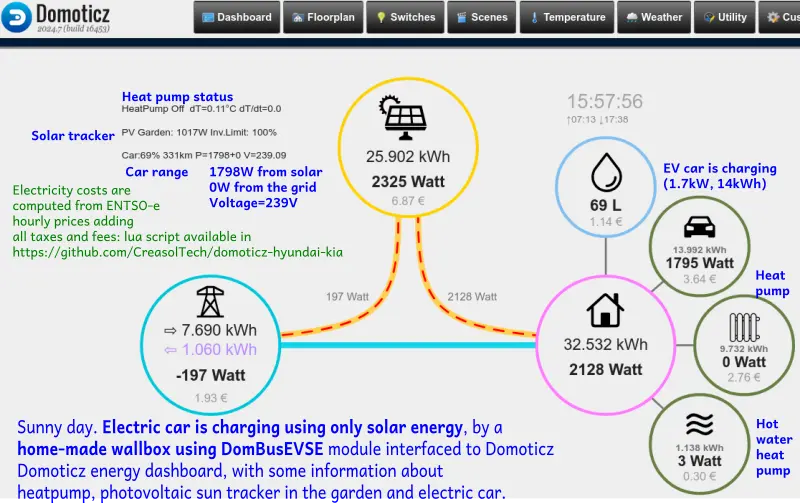
- management of the heat pump to adjust power based on internal and external temperatures, photovoltaic production, an estimate of how much the photovoltaic will produce during the day, the quarterly price of energy (even if I have a flat rate), the car charging status (I reduce power when I'm charging the car)
- load control, disabling loads when certain thresholds are exceeded for a prolonged period, alerts, etc.
- and more.
I don't control the interior lights (standard switches/two-way switches/buttons are enough for me), and unfortunately I don't have roller shutters.
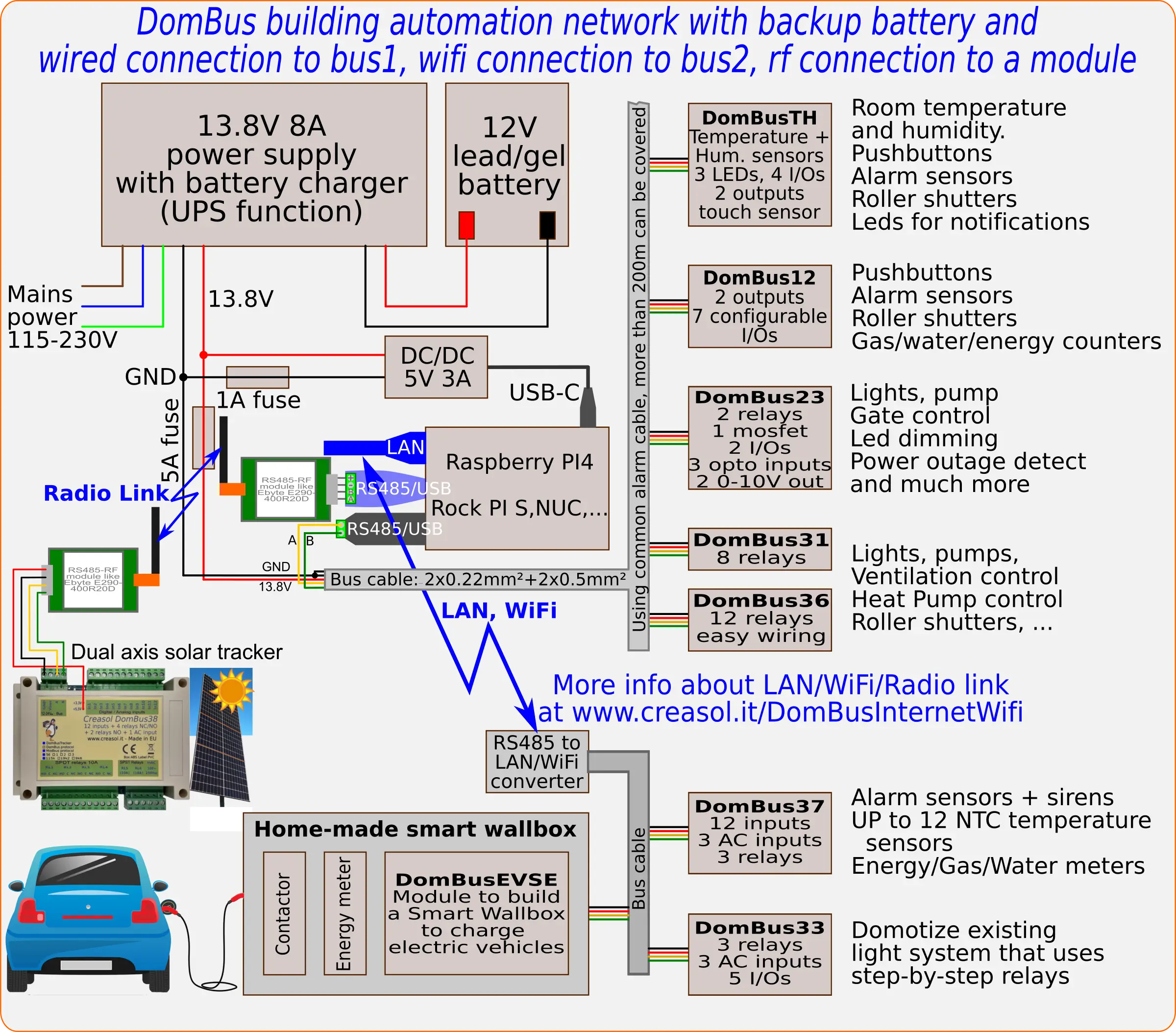
I started with Sonoff and Shelly, but then I realized they consume a lot of power (you can see them with a thermal imaging camera even though they're recessed into the wall!), so I switched to DomBus modules that connect via cable (alarm cable, 4x0.22mm²) without having to follow any topology: you make the connection however you like, and at the expense of having to run a wire through conduits, I got a more reliable system, less expensive than numerous Shelly devices around the house, and much less energy-hungry.
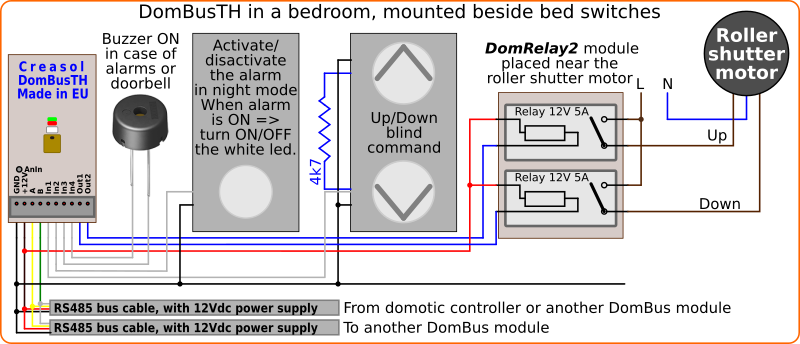
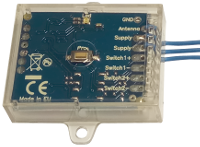
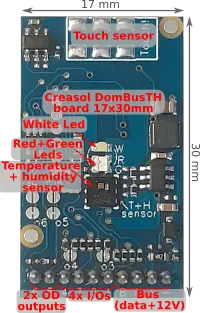
In almost every room, I have a DomBusTH card (approximately 17x30mm) mounted on a cap (a free-standing socket) that I drilled a hole in the center. It has the following functions:
- Temperature and humidity sensor
- Touch sensor, for use as a multifunction button
- Red and green LED for status signals
- White LED used as an emergency light or night light (it's a dim LED)
- 4 inputs, which can be connected to alarm sensors, external buttons, meters, buzzers, etc.
- 2 open-collector outputs that can be connected to two external relays, for example, for UP/DOWN roller shutters, or to a dehumidifier and towel warmer.
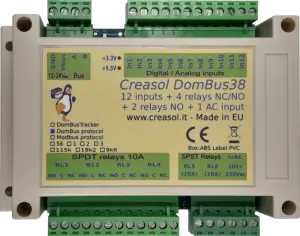
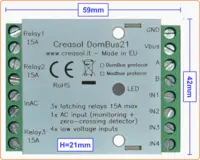
The bus carries both data and a 13.8V power supply (with a lead-acid backup battery), to which I also connected all the switches, routers, NVRs, and IP cameras. So if the power goes out, I have all the home automation/video surveillance/network functioning for several hours in case of blackout, and when the battery voltage drops below a certain thresholds, to extend battery life, the cameras are deactivated, then the NVR, then the internet router. This is also a very simple function to implement with the DomBus21 module, which has three 15A latching relays (the module always consumes 15mW, whether the relays are ON or OFF) and four inputs, one of which I use to measure battery voltage.
The beauty of this system is:
- Stability: never had a problem in 6 years
- Very low consumption: the entire home automation system, with over 200 devices, consumes an average of 2.1W! Imagine, this used to be the consumption of a Shelly with only two relays active!!
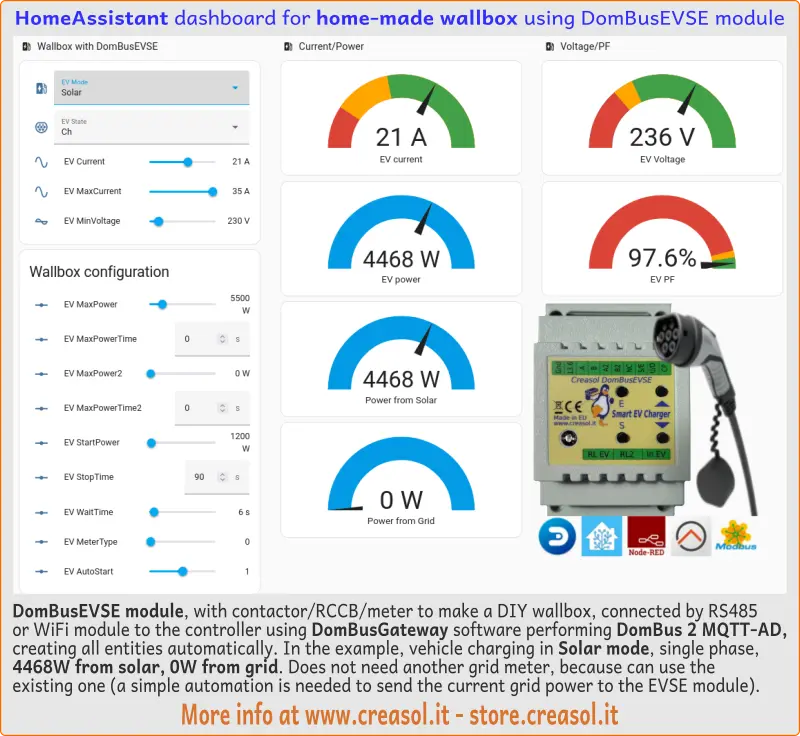
- The system communicates with Domoticz, Home Assistant, Node-RED, OpenHAB and other controllers, but similarly to KNX, it's also possible to set up simple automations that work directly between the modules. For example, the DomBus21 module that enables power to the IPCam and NVR uses an internal automation system, so it works even if the supervisor (Home Assistant or whatever) isn't working.
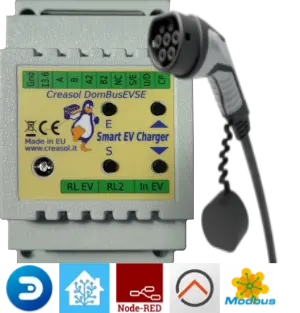
- There's also the EVSE module, which I used to build a DIY wallbox that has a ton of unique features.
The important thing is to have a control box large enough to accommodate meters and any relay modules, and then, as you need to install a new module (in a 503 / 504 box, junction box, or control panel), have the patience to bring an alarm cable to connect each module.
I hope I've given you some positive input. Don't get too paranoid about what to include in your house and what not. If you're building or renovating a home, install an alarm sensor (with magnetic contacts) for every door, window, and shutter. If you're installing thermal insulation, you can also run conduits externally to doors and windows. Don't forget to install cameras at the corners of the house, not too high up so you can see anyone walking around.
Good luck!!